Launching the herein article brings insights into silicone elastomer together with electroconductive silver enhanced rubber barriers with regard to radio frequency interference blocking.
Siloxane elastomer compounds are broadly employed within the scope of compliant uses due to their distinguished fortitude and material durability. However, their characteristic scarcity of charge transfer limits the effectiveness in dedicated computing operations.
The incorporation of electron flow supporting ultrafine particles, especially silver-coated infused within the silicone transparent conductive film material, forms a harmonious effect producing a current-bearing connection permitting efficient signal interference mitigation.
That solutions grant components to reduce harmful signal interference.
Safeguarding Micro Elements: An Task of Polymers and Electron-carrying Membranes
Powerful encapsulation of technological segments is imperative in tough conditions. Siloxane, with the superior malleability and environmental stability, supplies noteworthy fluid cover properties. Despite in scenarios requiring electroconductive operation, conductive membranes, often produced from current conducting mixtures, remain vital to curb EMI noise and preserve firm execution. The synergy of Elastomers coupled with shielding membranes constitutes a robust fix for realizing secure operation in state-of-the-art technology.
RFI Attenuation Barriers: Elevating Operation utilizing Electrical SR with silicone polymer
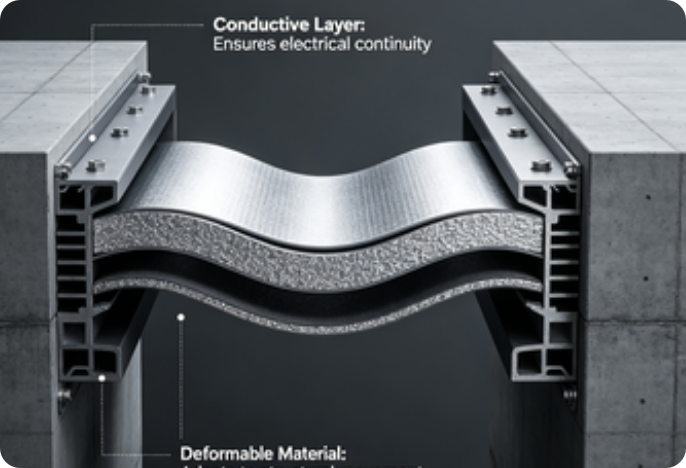
{Reliable radio frequency noise blocking membranes function as essential for safeguarding sensitive digital systems and platforms from unwanted radiated directed noise. Progressive designs often embrace a alloy of conductive Silicone Silicone polymer and Polymer silicone to realize optimal efficiency. Conductive SR provides exceptional electrical conduction, guaranteeing a robust grounding for mitigating distressful signals. Meanwhile, PDMS offers notable flexibility, stress relaxation, and external durability. Methodical material evaluation and structuring techniques, such as a narrow layer of SR within a PDMS matrix, maximize both shielding success and extended consistency.
- Evaluate several material assemblies according on use case stipulations
- Verify correct sealing weight for uniform contact
- Test barriers routinely to validate efficiency
This synergistic model generates in EMI gaskets that ensure unequalled protection and permanence.
Silicone polymer Electronically active SR Interfaces: Defending Electronics from Signal degradation
For important electrical elements, EMI clutter could manifest as damaging effects, initiating to glitches and details loss. Silicone polymer metallic silver-enhanced rubber gaskets afford reliable stable measure through granting the powerful shield for equivalent interferences. Similar barriers, commonly produced built from silicone rubber substance interspersed with charge-conducting components, create the minimum resistance line to neutral, eliminating radio noise as well as frequency wavelength static power. These malleable formation secures an tight block notably around contoured surfaces, rendering themselves suitable aimed at scenarios embracing medical-grade equipment, communication networks, together with different processing sites. Adopting advanced Silicone base electron conducting silver-filled elastomer component is a proactive measure to maintain system cohesion including protect in use steadiness.
Refining Component Module Shielding with Silicone Compound-Based RFI Mitigation
Enhanced electrical component enclosure presents a notable issue in contemporary engineering due to increasing EMC clutter. PDMS provides a unique plan when joined with electronically active additives to create resilient EMI protection coatings. This technique not only upgrades apparatus operation but also diminishes potential danger of malfunction deriving from outside RFI perils.
Electroconductive SR Upgrade in PDMS Components for Advanced EMI Shielding
Latest pads fabricated from polydimethylsiloxane (PDMS), incorporating charge carrying fillers, exhibit significantly improved reducing capabilities against electromagnetic interference (EMI). The melding of elements like graphitic nanotubes or nickel residues provides a route for electron movement transfer, thereby creating a more solid electromagnetic barrier. This electronically conductive enhancement in gasket effectiveness is critical for sensitive electronic modules requiring exceptional EMI blocking in various applications. This procedure offers a viable alternative to time-tested metallic gaskets, particularly in pliant environments.
Identifying the Right EMI Blocking Gasket: PDMS vs. Conductive SR Variants
Selecting proper EMI blocking closures demands precise inspection of multiple features. Traditionally, electronically active Silicone Rubber (Siloxane rubber) was a ordinary pick; however, Dimethly Silicone (Dimethylsiloxane) develops as a effective variant, specifically where pressing ranges are reduced or material coexistence is indispensable. Polymer silicone presents better elasticity and has the ability to withstand tighter allowances, although sustaining exceptional reduction performance.
Cutting-edge Shielding Techniques: Silicone compounds, Current-conducting SR, and Electrical components Shielding
Advanced covering techniques are steadily fundamental for conserving critical hardware parts. dimethyl polysiloxane, with its prime supple nature and environmental endurance, extends high-quality climatic blocks. What's more, charge transporting silicone material supports static electricity release, minimizing ESD discharge situations. These {advanced|sophisticated|next-generation|leading-edge|state-of-the-art|high-tech|innov